We are rapidly blowing past the 1.5°C guardrail –established to prevent catastrophic climate chaos and protect human security. To get back on track and keep heating below 1.5 degrees, our flagship report A Climate for Sufficiency, showed that we need to reduce consumption-based emissions to 1.1 tCo2e per capita by 2035. In high income industrialised countries, this means reducing lifestyle-based emissions on a scale rarely acknowledged — requiring reductions of up to 90% across key consumption domains.
So the question for governments is no longer abstract. It’s plain and simple: How do we spend this highly constrained carbon budget?
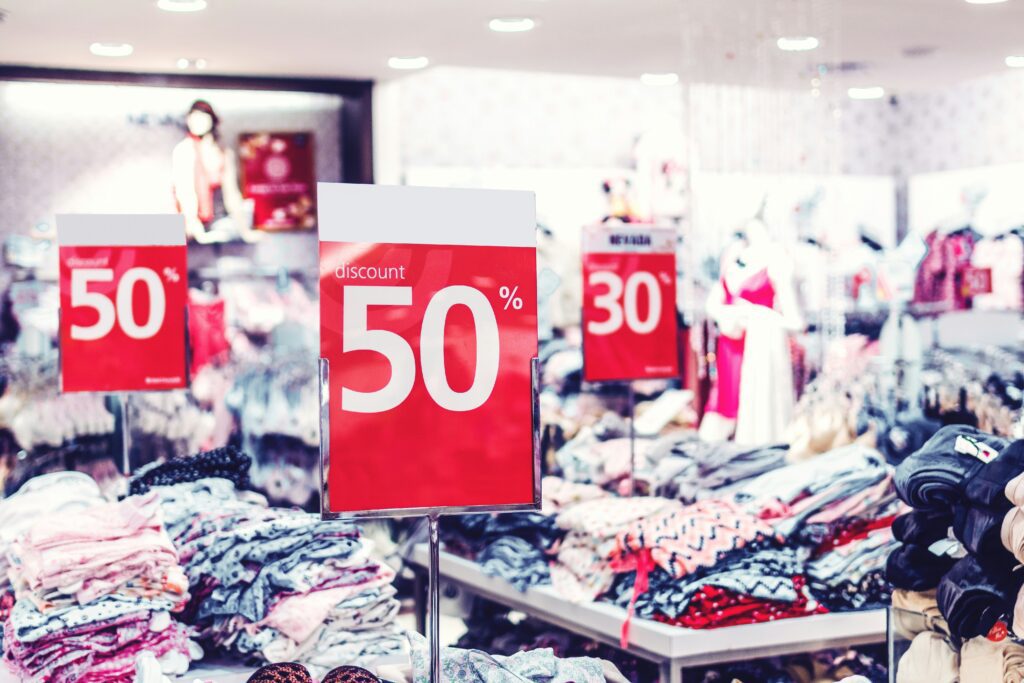
Do we use it to provide healthy food, warm homes and essential mobility? Or do we spend it on a flood of cheap, short-lived garments? To most people, the answer is obvious. No responsible government would squander a scarce carbon budget on yet more T-shirts destined for landfill, while neglecting the fundamentals of human wellbeing.
Yet this is exactly what today’s policy landscape allows. In the EU, the average person consumes 19 kg of clothing each year—and wastes 16 kg. This results in significant carbon impacts across the supply chain, responsible for an estimated 335 kg of CO₂ per person in 2022. That’s a staggering one-third of the entire 1.5 aligned carbon budget of 1.1 tonnes tCo2e per capita by 2035 -on fashion alone.
These impacts are not accidental. They are driven by a business model built on cheap fossil fuel inputs, exploitative labour practices, and relentless marketing and advertising practices. With the 1.5°C limit slipping out of reach, governments must take bold action to stop fashion burning through our limited remaining carbon budget.
The fashion sector has gone underregulated for far too long, and the EU stands out as the first jurisdiction to begin tackling the sector head on. But the current implementation of the EU’s Sustainable and Circular Textiles Strategy falls short. It leans heavily on weak efficiency tweaks—reducing the impacts of individual garments while ignoring the elephant in the room: overproduction. Recent research has shown how circular innovations in the fashion sector have been accompanied with strong rebound effects, with the growth in production and consumption wiping out resource efficiency gains, exacerbating environmental impacts rather than improving them.
With the revised Waste Framework Directive recently coming into force, Extended Producer Responsibility (EPR) schemes are set to become countries’ key policy tool for addressing fashion’s impact. Yet these policy levers are still rooted in a “waste management” paradigm, treating the problem as a matter of end-of-pipe cost sharing.
In a time of ecological emergency and significant inequality, textile waste is far from our only challenge. We need upstream solutions that disincentivise linear, high-volume business models and make space for circular, sufficiency-driven alternatives.
But EPR can be transformative—if designed carefully. That is why last month we brought together 25 experts from across Europe in a participatory systems thinking workshop to understand the root causes driving overproduction and overconsumption, and how policies can be designed to address these dynamics and mitigate unintended consequences.
We explored the potential of eco-modulated fees not just based on product criteria like durability and reparability but rather based on business practices. The hallmarks of the fast fashion business model: advertising intensity, synthetic fibre use, poverty wages and poor working conditions should be used as key criteria for eco-modulating fees. Producers must be made responsible not only for waste, but for the full social and environmental costs of their business models and these externalities must be internalised in substantial EPR fees.
This is an important moment to reset the rules of the game. By steering EPR toward fairness and sufficiency, Europe can show that a thriving fashion sector doesn’t have to cost the planet—and that bold policymaking can still shape a future worth wearing.