Inside the report
The Workshop Making Care Work Work, was held in July 2025. The thesis put forward in the workshop is that wellbeing, gender equality and sustainability could be enhanced through two societal changes: i) increasing staffing in formal care sector, and ii) reduction in and (gender) balancing of working hours.
Stakeholders from academia, civil society and trade unions were brought together, with areas of expertise including gender equality, labour, wellbeing and sustainability. The goals of the workshop were to:
- Understand and bring together alternative visions of a caring economy
- Collectively identify pathways, feedback loops and side-effects relevant to the two societal changes, thus creating causal loop diagrams describing the relevant systems.
- Identify leverage points for change and potential policy interventions.
- Inform outreach, communication and advocacy strategy for the societal changes.
- Provide an opportunity for those interested in environmental issues and those interested in care to come together and identify common ground, identifying allies and advocacy partners.
This report introduces systems thinking and explains why it is relevant for this issue. It then presents the causal loop diagrams developed during the workshops, alongside other learnings.
Key insights
It helps spell out interdependencies and identify leverage points.
The necessary pay increases can only be achieved through state support.
For example, care staff are likely to become more effective when released from the burnout trap, greater investment in preventative care could reduce costs of curative care, and a more caring economy could lead to more pro-social values.
The current system tends to see investment being siphoned off to private interests and bureaucracy.
The actual need for income puts a floor on working hours. But this interacts heavily with economic inequality, as a more equal society means that fewer people are close to that floor.
Reducing working hours will not automatically lead to more balanced working hours unless gendered norms about care work are simultaneously addressed.
This includes through reducing overall economic production, reducing overconsumption (by reducing income), reducing overconsumption (by reducing materialism), and increasing the time working people have to adopt more sustainable lifestyles.
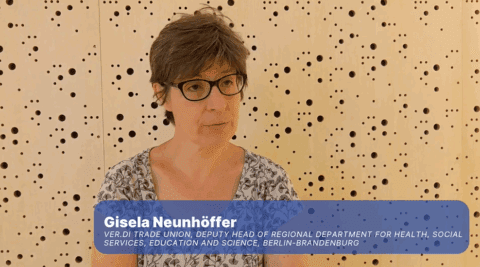
Interview with Gisela Neunhöffer
Ver.di Trade Union, Deputy Head of Regional Department for Health, Social Services, Education and Science, Berlin-Brandenburg

Interview with Dr. Ben Gallant
University of Surrey and Centre for the Understanding of Sustainable Prosperity
Economics still “has a lot to learn from other academic disciplines”
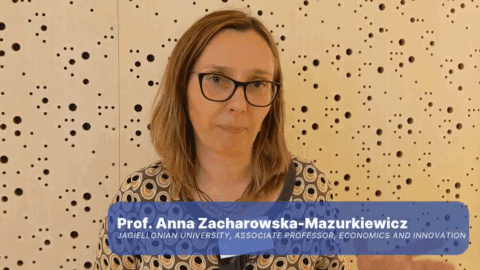
Interview with Prof. Anna Zacharowska-Mazurkiewicz
Jagiellonian University, Associate Professor, Economics and Innovation
“The big takeaway for me is the systems thinking… this is how our world works, it is complex”
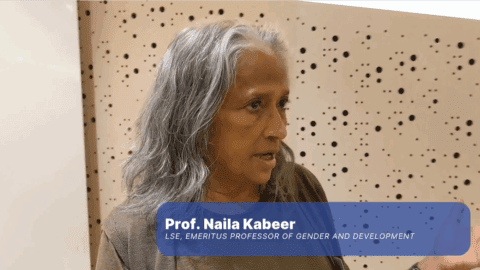
Interview with Prof. Naila Kabeer
LSE, Emeritus Professor of Gender and Development
“Some bits of the system have far more transformative potential than others…. So the key is to identify those bits”
Support our work
Hot or Cool Institute produces evidence-based research to inform policy, shift social norms, and promote low-carbon, nature-positive lifestyles. All our work is freely accessible and open source, ensuring that anyone can use our research, tools, and guidance at no cost.
We rely in part on public support to sustain our non-profit activities, expand research, and keep resources freely available. Your contribution helps us reach more people, influence more policies, and accelerate systemic change.
If you share our vision, you can support us here.
Partners