Every day I cycle across Berlin to the Hot or Cool Institute office. I am lucky that the entire route is on cycle lanes, with a lovely section through the iconic Gleisdreieck Park, itself a testament to the power of transformative urban planning.
Nonetheless, for almost the entire 30-minute route, empty parked cars line the streets I cycle down, bumper to bumper on both sides of the road. As I pass these sidewalks of steel, I can’t help but think: surely there is a better way to design our streets so that they better serve people’s needs while respecting the limits of the planet?
This question was also centre stage at a recent workshop Hot or Cool hosted in Amsterdam alongside our partners at the 11th Hour Project, SOMO, GAIA and the EEB.
The workshop brought together 30 participants from around the globe, including academics, policy advisors, civil society representatives, Indigenous people and mining activists, to discuss one of the great paradoxes of our time: how can we achieve an equitable energy transition while also reducing demand for new mining and the associated harms to frontline communities and ecosystems?
Cars and their dominance in our cities are key to understanding this dilemma.
Existing approaches to transport decarbonisation rely heavily on scaling up electric vehicle production and battery manufacturing through a range of policy instruments, including fuel economy standards, CO2 emissions standards, state aid, subsidies and sales or stock targets. As a result, the sale of EVs has skyrocketed in recent years, and with more affordable models entering the market, further expansion is expected.
While electrification is a necessary part of the clean energy and climate transition, replacing today’s vehicle fleet one-for-one with electric cars will require large volumes of minerals and perpetuate many of the environmental and social harms associated with extraction and processing. For six key minerals (copper, lithium, nickel, cobalt, graphite and magnet rare earths), electric vehicles are projected to account for about two thirds of the growth in clean energy mineral demand between 2025 and 2040.
Investment is currently flooding into mineral and battery supply chains, and manufacturing capacity is scaling fast: global manufacturing capacity for lithium-ion batteries is now estimated at two to five times current demand.
The majority of these minerals will come from projects that intersect with Indigenous Peoples’ lands, meaning that the communities least responsible for the climate crisis risk bearing the greatest burden and harm from the transition.
And yet, an obvious solution to this dilemma is staring us in the face every day. If we redesign our cities away from cars, making public transport, shared and active mobility the default and most accessible options, we can massively reduce the need for minerals and mining and the harms it causes. Estimates from recent studies show that a modal shift across Europe could cut minerals demand by 29 to 36 per cent by 2050.
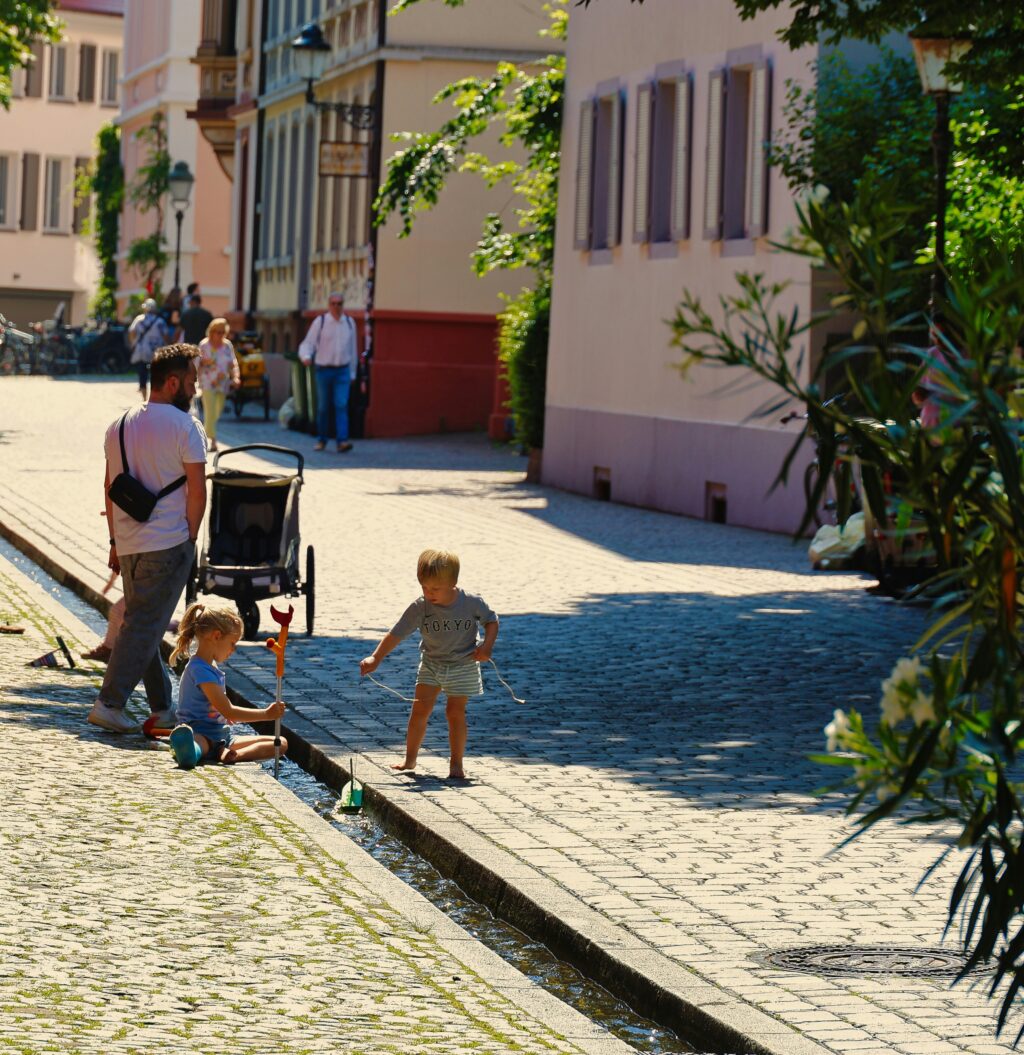
But it is not just the environment and Indigenous communities on the frontlines of extraction that will benefit. We can reclaim the streets for people: for kids to play in, for the elderly to catch their breath on a park bench, for cyclists and pedestrians to navigate safely.
The blueprints exist. Oslo is a leading example: in 2016 the city launched its car-free liveability programme. Through measures such as removing street parking, expanding green space and public infrastructure, and improving public transit, the city has handed urban space back to the people in a planned transition. This approach worked well because it involved people, bringing citizens into workshops and street engagements to co-develop and redesign their spaces. Interestingly, this movement wasn’t built by environmental activists but by parents who wanted their kids to be able to get to school safely, and so campaigned for car-free school perimeters known as ‘Heart Zones’. The successes are clear: in 2019, Oslo recorded zero cyclist or pedestrian deaths.
More recently, London has moved to pedestrianise the iconic Oxford Street, with an overwhelmingly positive response; shopkeepers have been pleasantly surprised by the extra footfall. Meanwhile, civil society groups in India are taking to the streets to conduct walkability audits, putting pressure on their governments to make streets safe for people to navigate. In Berlin, community groups have taken matters into their own hands, establishing Kiezblocks, using temporary road closures in residential streets to keep cars out and make space for children to play.
The paradox of the energy transition and its extractivist underbelly is a complex problem, requiring interventions across the entire economic system and confrontation with significant vested interests. Yet the examples from Oslo to Ahmedabad show that an untapped power lies with people and their drive to reshape their cities.
I left the three-day workshop in Amsterdam feeling energised by the community of change makers we had brought together, and excited about the future possibilities of reclaiming the streets for people and the cascading benefits this will bring.
To learn more about our work in this space, visit: Mining Less, Living Well: A sufficiency lens for minerals, metals, and mining.